
Clinical AI Evaluation: Jev vs GPT-6 Cost & Speed Analysis
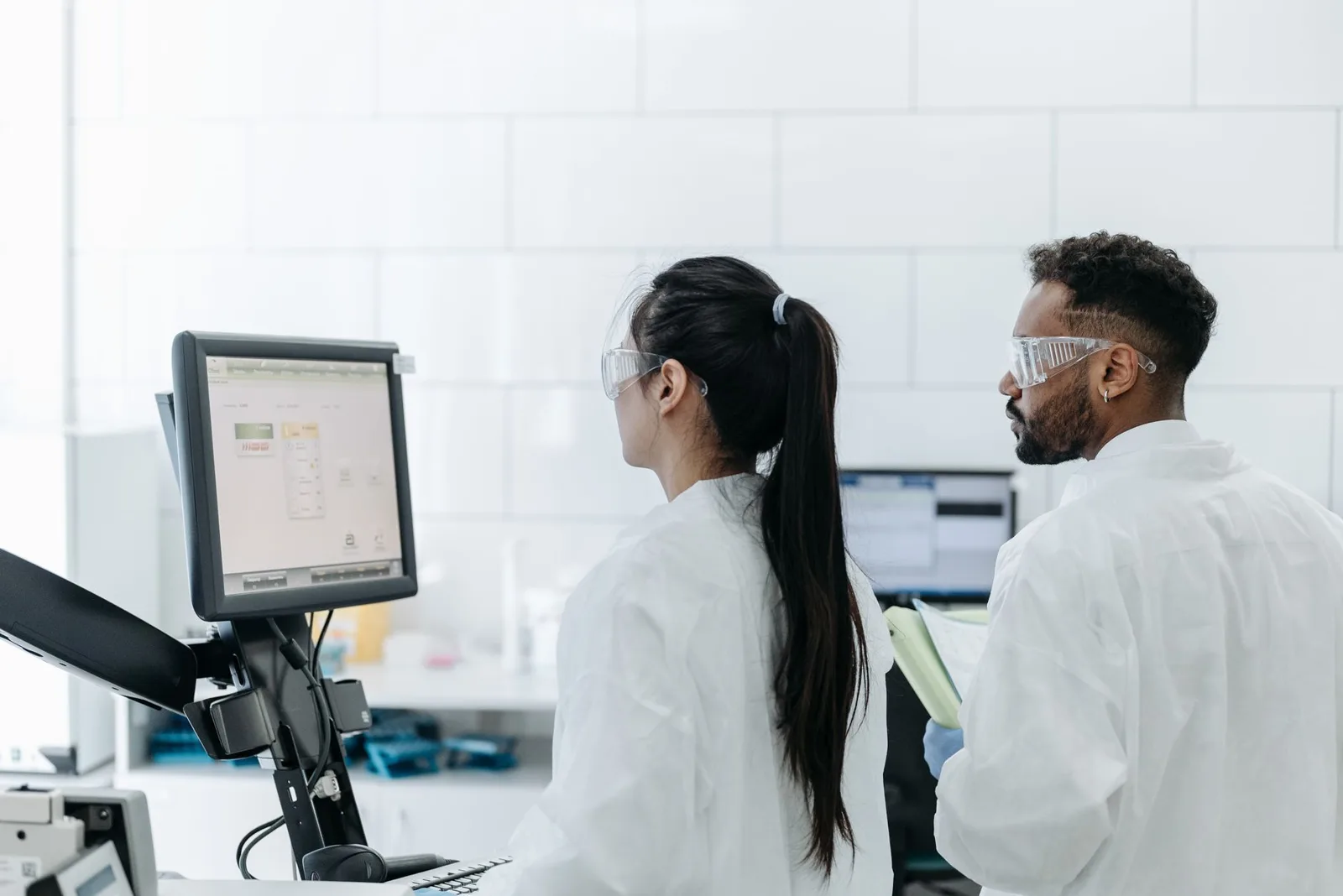
Discover how Jev reduces clinical AI evaluation costs by up to 294x compared to GPT-6. Learn about speed gains and reliability risks in automated medical judges
Full-length guides split into chapters — read them in order, or jump to the one you need
12 chapters
Both have an LLM write the code. What separates them is who decides the code is acceptable, and where correctness is pinned down — in a persons head, or in a file that can be re-run. With a comparison table and the same task done both ways.
Start reading →9 chapters
In everyday conversation "AI" means three or four very different things. This chapter lays out where each term sits — from classical ML up through LLMs, VLMs and VLAs — and settles the vocabulary people most often confuse, like Dense versus MoE.
Start reading →5 chapters
Writing with AI is allowed, and it neither helps nor hurts by itself. Google looks at purpose and value. This chapter covers the scaled content abuse policy, the Who, How and Why questions, and telling readers that AI was used.
Start reading →5 chapters
The three stages every page passes through before it can appear in results — crawling, indexing, serving — the SEO beliefs Google itself says are false, and how to use Search Console to tell why a site is not showing up.
Start reading →1 chapters
A real record of fine-tuning a 2B Thai OCR model to read business documents: seven rounds of full fine-tuning, the general ability it lost, the switch to a LoRA that made the live system work, the loop guards developed alongside it, and a train/test leak we only just found, with the numbers recomputed.
Start reading →5 chapters
Fine-tuning is not the first thing to try. The big providers themselves say start with prompting, and in 2026 fine-tuning through their APIs has shrunk sharply. This chapter helps you tell whether your problem needs a prompt, RAG or fine-tuning.
Start reading →24 chapters
A guide series on Claude Code — from first install to production use
Start reading →
A human-AI discovery loop has enabled the construction of irreducible polynomials with Mahler measures below Boyd's limit point for every even degree up to 2000, surpassing the prior limit of degree 180. The team released a verified dataset and introduced the Generalized Boyd algorithm.
New research shows scaling AI agents improves familiar games but breaks generalization in new worlds. Discover why data volume vs diversity matters for embodied
Discover how Jev reduces clinical AI evaluation costs by up to 294x compared to GPT-6. Learn about speed gains and reliability risks in automated medical judges
OpenAI has expanded its advertising platform to 26 new countries, bringing total coverage to 89. More than 100,000 advertisers have launched campaigns since the program began, though active users appear lower. The move supports OpenAI’s broader revenue goals ahead of a potential IPO.
Discover how AT&T partners with OpenAI to co-design enterprise legal workflows, scaling knowledge while keeping human lawyers in control of final judgment.
Tenstorrent raises $1.5B at a $6.2B valuation, rejecting Intel and Qualcomm to scale open-weight AI chips and challenge Nvidia's dominance in hardware.
New research reveals AI agents excel at ML engineering but lack deep domain insight in scientific discovery, as shown by the Agent4Sci benchmark study.
OpenAI paused reinforcement learning training for two weeks in August 2026 to strengthen containment measures after internal incidents, implementing stricter isolation, red-teaming, and monitoring. The move sets a precedent for self-regulation amid growing concerns over AI safety.
OpenAI acquires Orchestra Bio to automate drug development coordination. Discover how this AI acquisition shifts life sciences strategy from discovery to ops.
A new benchmark tests how well AI agents perform in real-time environments, revealing that faster models often outperform slower, more thoughtful ones when timing matters — and a novel 'teacher-student' method helps close the gap.
Discover how Google DeepMind and GovTech use on-device AI for real-time scam detection in Singapore, protecting privacy without cloud data egress.
Can AI predict new antibiotics before lab tests? Google DeepMind's Antigravity identifies candidates rapidly, but wet-lab validation remains essential for proof
We ran Qwen3 27B, 32B, 35B-A3B, and 80B on an RTX 5090 + 5080 box to find the real sweet spot for local AI in 2026. Here is which model fits which job — and which one to drop.
Mixture-of-Experts explained with the model cards of Kimi K3, DeepSeek V4, Qwen3.6, MiniMax M3, GLM-5.3 and Llama 4: total versus active parameters per token, why it is cheaper, why it still needs the full VRAM, and what each model costs per Thai text.
Lessons from building a naturalness meter for AI-written Thai articles: the silently-broken word and sentence tools, and how to measure Thai rhythm in the unit the language actually marks.
Learn how to prevent XSS in Astro by sanitizing user HTML and fixing regex vulnerabilities in define:vars. Secure your static site today.
Behind KoishiAI: Astro builds every page as a static HTML file, Cloudflare Pages serves it, and a Python backend takes each news story from source to site.