
Anthropic Launches MHS Framework to Let AI Agents Control Physical Devices
Anthropic has introduced the Model Hardware Standard (MHS), a framework designed to enable AI agents to interact with physical machinery like robots and lab equipment. The system uses standardized interfaces and safety tags to manage real-world constraints, with initial testing underway among select research partners.
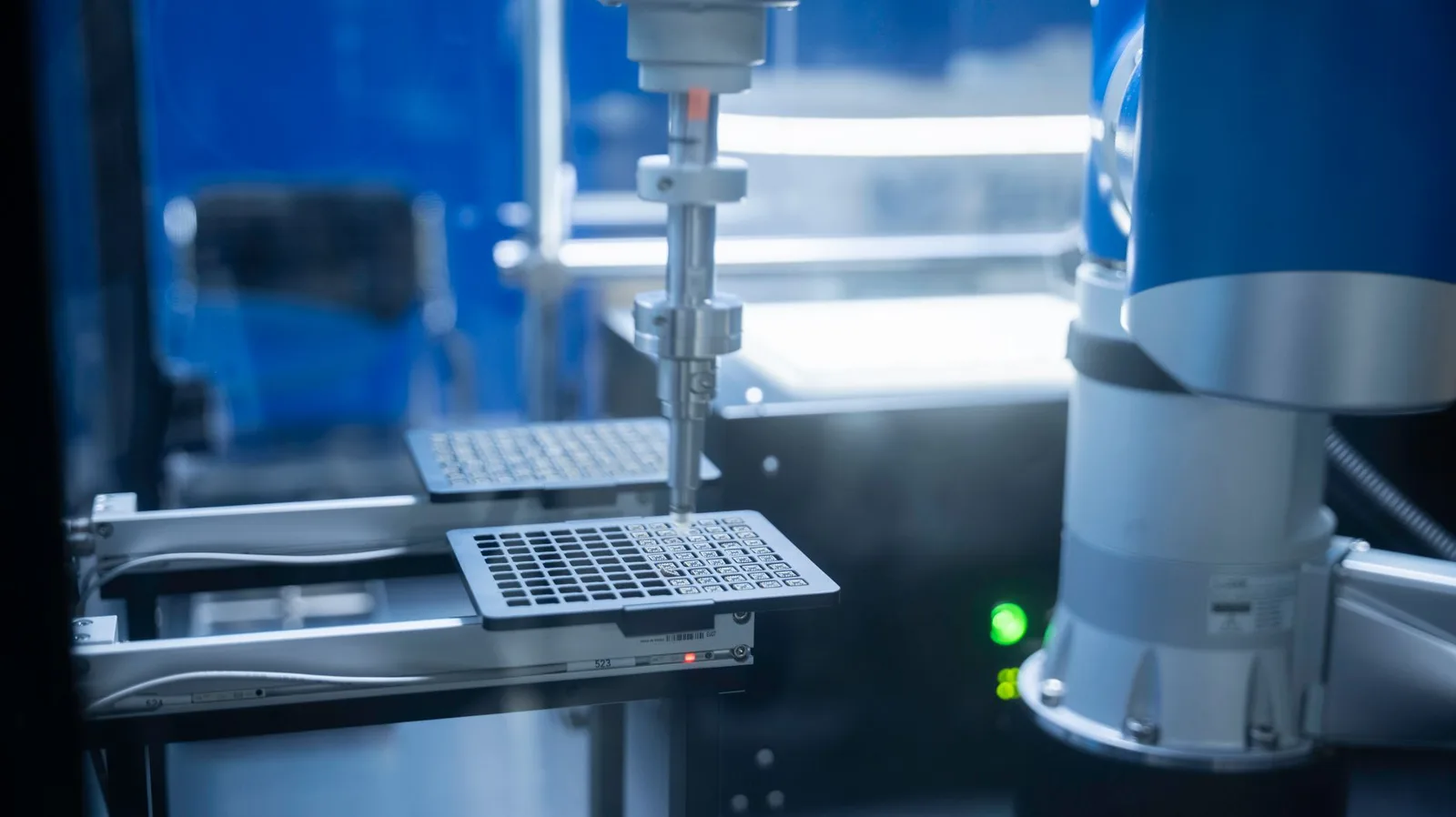
TL;DR: Anthropic launched Model Hardware Standard (MHS) to let AI agents control physical devices like robots and lab equipment using standardized interfaces. This framework aims to streamline industrial automation and scientific experimentation by bridging software models with real-world machinery, marking a pivotal step toward autonomous physical operations.
Key facts
- Anthropic launched the Model Hardware Standard (MHS), a framework enabling AI agents to control physical devices like robotic arms and lab equipment via standardized interfaces.
- MHS is model-agnostic, supporting various AI systems beyond Anthropic’s Claude series, and uses safety tags to embed hardware constraints such as weight limits and motion ranges.
- Initial testing involves select partners including Amazon Web Services (Strands Robots), Hugging Face (LeRobot), Raspberry Pi, and Universal Robots for safety protocol evaluation.
Anthropic Unveils Framework to Connect AI Agents with Physical Systems
Anthropic has announced the Model Hardware Standard (MHS), a new framework intended to enable AI agents to control physical devices such as robotic arms, microscopes, and quantum computing hardware [3][4]. Described by the company as analogous to a USB-C connector for hardware, MHS provides a uniform interface that allows AI systems to communicate with machines equipped with programmable controls [3]. This standardization aims to streamline interactions between software-based AI models and real-world tools, reducing barriers in scientific experimentation and industrial automation.
Design and Functionality
MHS is designed to be model-agnostic, meaning it can work with various AI systems regardless of their origin, not just Anthropic’s own Claude series [3]. The framework includes a standardized tagging system that embeds hardware-specific constraints—such as weight limits, motion ranges, and safety thresholds—into reference files. This allows AI agents to reason about device capabilities even when they haven’t been trained on those exact tools, improving adaptability across diverse equipment [2].
Anthropic has demonstrated MHS’s potential by showing how an AI agent could adjust a laser system through iterative calibration, using visual feedback from a camera to verify results. The agent also reasoned through steps to pick up an aluminum can with a robotic arm, illustrating its ability to plan and execute physical tasks without prior task-specific training [2]. These examples highlight the framework’s goal of closing the loop between data analysis and experimental execution in research environments.
Partnerships and Testing Status
The Model Hardware Standard is currently being tested in a limited research preview with select organizations, including Amazon Web Services (via Strands Robots), Hugging Face (LeRobot), Raspberry Pi, and Universal Robots [2][3]. These partners are helping evaluate safety protocols and refine operational best practices for AI systems interacting with physical hardware. While Anthropic has not disclosed the full scope of these collaborations or confirmed their public status, the company stated that feedback from this phase will inform future development.
Safety, Accountability, and Future Plans
Anthropic acknowledges potential risks associated with enabling AI to manipulate physical devices, including misuse in areas like biological weapons research. However, the company asserts that built-in safety guardrails within its models are designed to prevent harmful actions [4]. Despite this, questions remain about liability when hardware malfunctions occur—particularly as AI agents assume greater autonomy in real-world operations.
The company plans to open-source MHS after thorough evaluation with partners and completion of safety testing [3][5]. This move aims to establish an industry-wide standard for integrating AI with physical systems. Anthropic has also expanded its silicon team, hiring Caitlin Kalinowski—a former executive at OpenAI, Meta, and Apple—to lead chip development for its models [3], signaling a broader strategic shift into hardware infrastructure.
While the full capabilities of MHS remain under evaluation, the framework represents a pivotal step toward enabling AI agents to operate beyond digital environments. As Anthropic moves forward with open-sourcing the standard, the focus will increasingly center on safety, interoperability, and real-world reliability across diverse applications.
Sources
- Anthropic pushes into physical world with new standard to help AI agents operate machines (www.cnbc.com) — 2026-08-27
- This Is How Anthropic Thinks AI Agents Should Navigate the Physical World (www.wired.com) — 2026-08-27
- Anthropic’s new hardware standard lets AI agents control the physical world (www.businessstory.org) — 2026-08-27
- Anthropic’s new framework will let AI agents control hardware (www.computerworld.com) — 2026-08-28