
Real-Time Surgical Simulation: NVIDIA Cosmos-H-Dreams at 160 fps
Discover how NVIDIA's Cosmos-H-Dreams delivers real-time surgical simulation at 160 fps on a single RTX PRO 6000 GPU, enabling robot training and rehearsal.
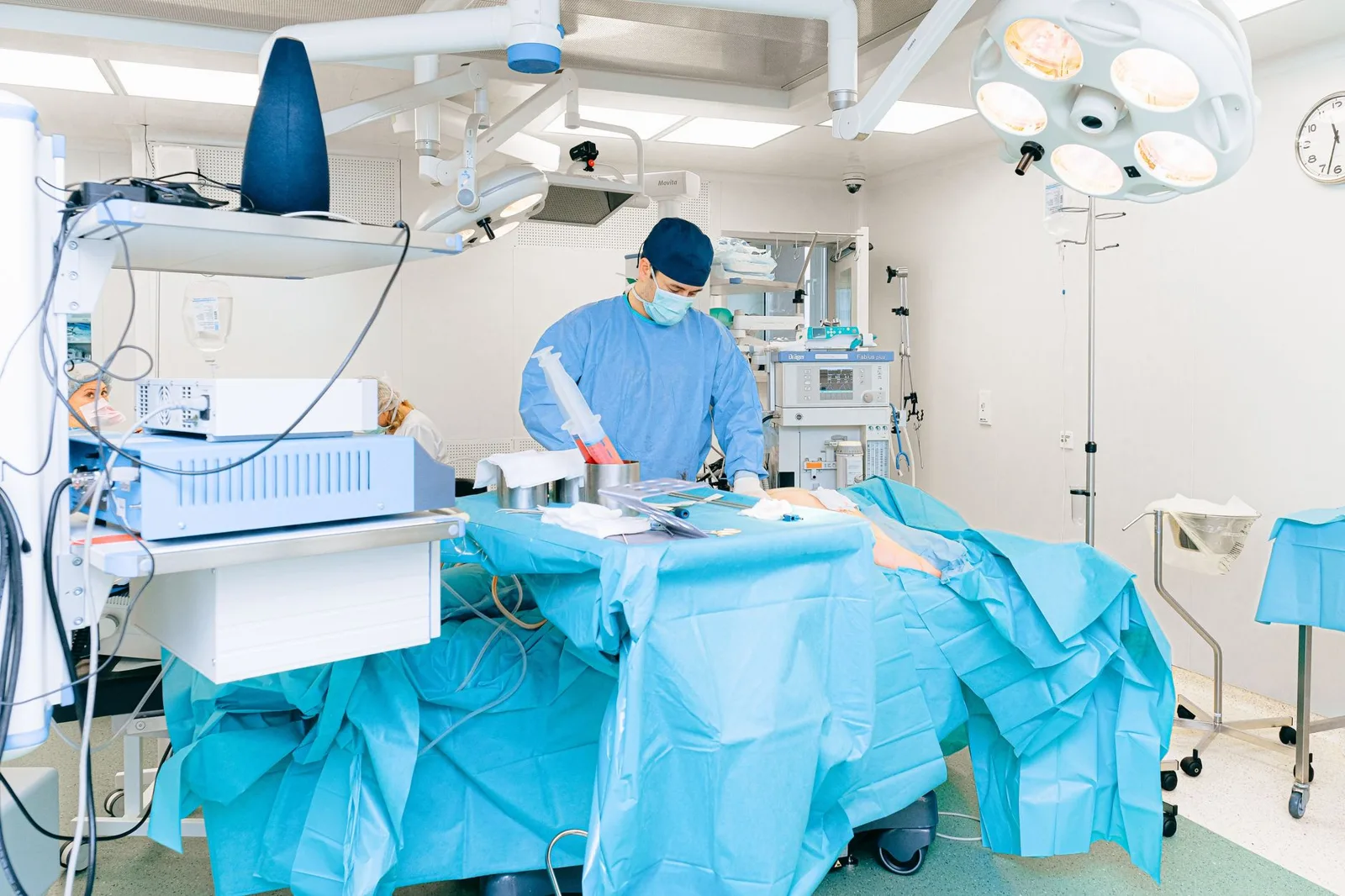
TL;DR: Cosmos-H-Dreams, NVIDIA’s new generative world model for surgical robotics, runs at roughly 160 frames per second on a single RTX PRO 6000 GPU—about ten times faster than typical diffusion-based simulators. The speed boost comes from a distilled student network that needs only two denoising steps per frame and an optimized FlashDreams inference library. This real-time capability lets researchers rehearse suturing, test autonomous policies, and generate synthetic data far more efficiently, accelerating the development of safe surgical robots.
Key facts
- Cosmos-H-Dreams streams video predictions at about 160 fps on one NVIDIA RTX PRO 6000 GPU, a ten-fold speed increase over the 10 fps of standard diffusion-based surgical simulators.
- The model uses a self-forcing distillation process that conditions on its own previously generated frames and requires only two denoising steps per latent frame.
- The released checkpoint is specialised for the da Vinci Research Kit (dVRK) tabletop suturing task and has been piloted with CMR Surgical’s Versius controller.
- Cosmos-H-Dreams is built on the Cosmos-Predict2.5-2B foundation model, with a teacher network warm-started from the Open-H 44-dimensional action-conditioned checkpoint.
- The system is released under the NVIDIA Open Model License, allowing both commercial and non-commercial use worldwide.
Overview
NVIDIA has unveiled Cosmos-H-Dreams, a generative world model that can simulate a surgical scene in real time while responding to robot commands. The system streams video predictions at roughly 160 frames per second on a single RTX PRO 6000 GPU, delivering a ten-fold speed increase over conventional diffusion-based simulators that typically manage only about 10 fps. This performance leap turns a previously offline video generator into an interactive platform for surgeons, researchers, and autonomous-robot developers.
Technical Approach
Cosmos-H-Dreams is a causal, few-step distilled student network derived from a larger bidirectional teacher called the Cosmos-H-Surgical-Simulator. The teacher model, which runs offline, was first warm-started from the Open-H 44-dimensional action-conditioned checkpoint and built on the Cosmos-Predict2.5-2B foundation model. The student learns through self-forcing distillation, meaning it conditions on its own previously generated frames and therefore can operate autoregressively, producing future video in short blocks while a human or an AI policy issues new robot-kinematic commands [1][2][4].
A key efficiency gain comes from limiting the diffusion process to just two denoising steps per latent frame. Traditional diffusion simulators often require dozens of steps, which slows them down dramatically. By reducing the step count, Cosmos-H-Dreams can keep up with the rapid feedback loop needed for real-time interaction.
The inference engine, FlashDreams, further accelerates execution. It uses streaming key-value caches and CUDA-Graph capture, techniques that keep data resident on the GPU and eliminate costly kernel launches. Together, these optimisations enable the model to sustain the reported ~160 fps on a single RTX PRO 6000 card [4].
Performance Benchmarks
The performance claim is grounded in NVIDIA’s own measurements. When run on an RTX PRO 6000, Cosmos-H-Dreams consistently delivers about 160 fps, which is ten times faster than the 10 fps typical of diffusion-based surgical simulators. This speedup is not merely a numeric curiosity; it translates into a dramatically smoother visual experience and allows closed-loop policy evaluation without the latency that would otherwise mask subtle control errors.
The model’s real-time capability also reduces the compute cost of generating synthetic data. Where a traditional simulator might need hours to produce a few minutes of footage, Cosmos-H-Dreams can generate the same amount in a fraction of the time, opening the door to large-scale data creation for training machine-learning policies.
Targeted Use Cases
NVIDIA lists several immediate applications for Cosmos-H-Dreams:
- Real-time surgical-skill rehearsal – trainees can practice suturing on a virtual patient while receiving instant visual feedback.
- Interactive demonstration – educators can showcase robot-assisted procedures in a live setting.
- Closed-loop evaluation of robotic policies – autonomous control algorithms can be tested in a simulated environment that reacts instantly to their commands.
- Synthetic data generation – researchers can produce massive labeled video datasets for training perception models.
The released checkpoint is specialised for the da Vinci Research Kit (dVRK) tabletop suturing task, a widely used research platform. Early pilots have also shown compatibility with CMR Surgical’s Versius controller, suggesting the model can adapt to multiple robot embodiments [1][4].
Availability and Licensing
Cosmos-H-Dreams is distributed under the NVIDIA Open Model License, which permits both commercial and non-commercial use worldwide. The model, its checkpoint, and the FlashDreams inference library are publicly available on NVIDIA’s Hugging Face repository and GitHub, making it straightforward for research labs and companies to integrate the technology into their pipelines [1][2].
Implications for Surgical Robotics
The shift from offline, low-speed simulation to real-time, high-throughput generation could accelerate the development of autonomous surgical systems in several ways:
- Faster iteration cycles – Engineers can test policy updates and see the impact within seconds rather than minutes, shortening the research loop.
- Lower barrier to entry – Institutions that cannot afford expensive physical robot setups can now experiment with realistic visual feedback on modest GPU hardware.
- Scalable data creation – Large synthetic datasets can be produced quickly, supporting the training of deep perception models that require diverse visual scenarios.
- Improved safety testing – Real-time closed-loop evaluation allows developers to expose edge-case failures that might be missed in slower, batch-mode simulations.
While Cosmos-H-Dreams does not replace the need for physical validation—real surgical robots must still be tested on real tissue—it provides a powerful intermediate step that can filter out many design flaws before expensive hardware trials.
Future Directions
NVIDIA’s broader Cosmos platform includes other generative models such as OmniDreams, which focuses on autonomous vehicle simulation. The success of Cosmos-H-Dreams suggests a roadmap where similar real-time, action-conditioned models could be created for other high-risk domains, from interventional radiology to endoscopy. Continued improvements to the underlying foundation model, larger action spaces, and tighter integration with robot control stacks are likely next steps.
Cosmos-H-Dreams represents a significant stride toward making surgical simulation as responsive as the real world, giving researchers a new tool to speed up the safe deployment of autonomous surgical robots.
Sources
- nvidia/Cosmos-H-Dreams · Hugging Face (huggingface.co) — 2024-07-17
- GitHub - NVIDIA-Medtech/Cosmos-H-Surgical-Simulator: Cosmos-H-Surgical-Simulator (github.com) — 2026-02-18
- HyperAI (hyper.ai) — 2026-07-27