
Memory-Centric AI Chips: XCENA Secures $135M Series B Funding
XCENA raised $135 million in a Series B round to accelerate its memory-centric AI chips, promising lower latency and power use by placing compute next to DRAM.
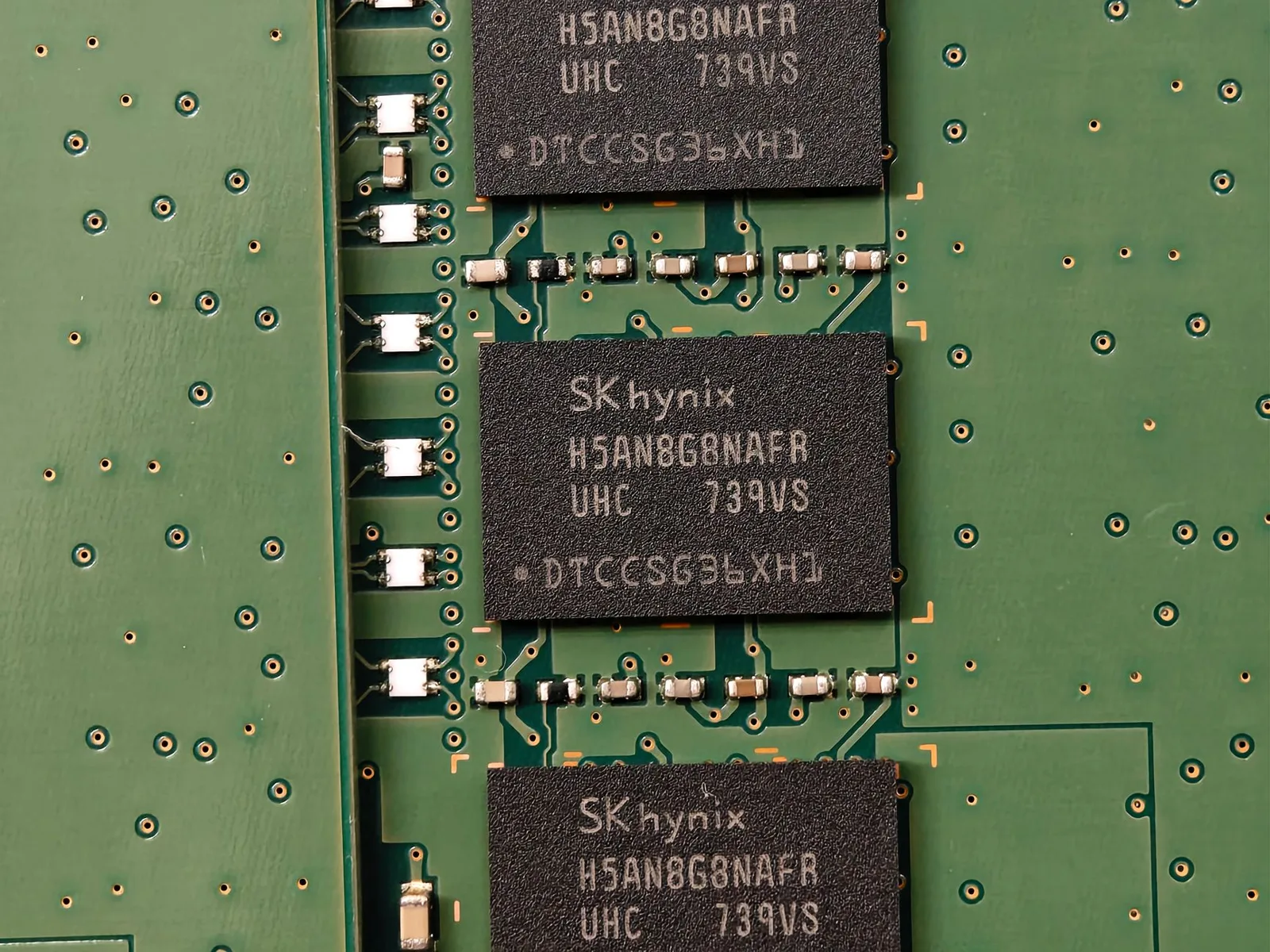
TL;DR: XCENA closed a $135 million Series B at a $570 million valuation to fund its MX1 memory-centric accelerator, which places compute logic beside DRAM to reduce data-movement costs in AI inference. The design promises lower latency, power draw and server counts, offering cloud providers a potential cost advantage. Investors see memory, not raw compute, as the next big lever for generative-AI efficiency.
Key facts
- XCENA raised $135 million in a Series B round at a $570 million post-money valuation, bringing total funding to $185 million [1][3].
- The round was co-led by Seoul-based venture firms Altinum and IMM I [1].
- XCENA’s MX1 chip is a memory-centric accelerator that puts compute logic directly beside DRAM to handle routine data operations near memory [1][3].
- The MX1 prototype will enter mass production at Samsung foundries by the end of 2026, with first revenues expected in 2027 [1].
- Founders Jin Kim (CEO), Dohun Kim (CTO) and Harry Juhyun Kim (CPO) are former engineers from Samsung and SK Hynix [2][3].
- XCENA argues that the dominant bottleneck for generative-AI inference is data movement between CPU, GPU and memory, not raw compute [1][2][3].
- AI-chip startups collectively attracted $1.1 billion in venture funding in a single week in February 2026, showing strong investor appetite for new hardware approaches [8].
Funding milestone and market positioning
XCENA, a four-year-old AI-chip startup with offices in South Korea and the United States, announced a $135 million Series B financing that values the company at $570 million and lifts its total capital raised to $185 million [1][3]. The round was co-led by Seoul-based venture firms Altinum and IMM I and reflects a growing belief among investors that the next major cost lever for generative-AI services lies in memory performance rather than raw compute power.
Why memory matters more than compute
According to XCENA’s founders, the dominant bottleneck in modern AI inference is the cost of moving data between the CPU, GPU and memory for each token generated by large language models. This data-movement overhead inflates latency, drives up power consumption and forces cloud operators to deploy more servers to meet demand [1][2][3]. In contrast, the compute units inside CPUs and GPUs have steadily become more efficient over the past decades, while memory technology has lagged behind.
The MX1 memory-centric accelerator
XCENA’s flagship product, the MX1 chip, is described as a memory-centric accelerator – a processor that integrates compute logic directly next to DRAM so that routine data operations can be performed close to where the data resides. By reducing the distance that data must travel, the MX1 aims to cut inference latency, lower power draw and reduce the number of servers required for large-scale AI workloads [1].
The company plans to move the MX1 from prototype to mass production at Samsung’s foundries by the end of 2026, with the first revenues expected in 2027 [1]. This timeline puts XCENA ahead of many competitors that are still focused on traditional GPU-centric designs.
Founder pedigree and strategic timing
XCENA was founded in 2022 by CEO Jin Kim, CTO Dohun Kim and CPO Harry Juhyun Kim, all of whom previously worked as engineers at Samsung and SK Hynix [2][3]. Their deep experience in memory-chip manufacturing gives the startup a credible advantage when designing a product that blurs the line between compute and memory.
The fundraising comes at a moment when the three leading memory-chip makers—Samsung, SK Hynix and Micron—each surpassed a $1 trillion market valuation in May 2026, underscoring the strategic importance of memory in the broader semiconductor ecosystem [2].
How memory-centric chips could reshape AI infrastructure in Southeast Asia
Southeast Asian cloud providers face a unique set of challenges: electricity costs are relatively high, data-center space is at a premium, and many markets are still building out high-speed networking infrastructure. A chip that can lower power consumption and reduce the number of servers needed for inference could therefore have a disproportionate impact in the region.
Traditional edge-AI solutions, such as running lightweight models on devices like the Jetson Orin Nano, focus on reducing compute requirements to fit within tight power envelopes. XCENA’s approach tackles the problem from the opposite direction—by making the memory subsystem more efficient, it can keep large models in the cloud while still delivering lower per-token costs. This could enable Southeast Asian providers to offer competitive generative-AI services without the massive capital expenditures required for dense GPU farms.
Competitive landscape and investor enthusiasm
While XCENA pushes a pure memory-centric design, other AI-ASIC startups are exploring SRAM-cache architectures that keep a small amount of fast memory on-chip to accelerate specific workloads. Industry observers have noted this broader trend of focusing on cache hierarchies, although pure memory-centric startups like XCENA receive comparatively less venture attention [4].
Nevertheless, the overall funding environment for AI-chip companies remains robust. In February 2026, AI-chip startups collectively attracted $1.1 billion in venture capital in a single week, highlighting strong investor appetite for novel hardware solutions that can improve AI efficiency [8].
Outlook
If XCENA can deliver on its promise of lower latency, power consumption and server density, the MX1 could become a key building block for cost-conscious AI providers worldwide. Its success would validate the hypothesis that memory, rather than compute, is the next frontier for scaling generative-AI services. For Southeast Asia, where power and infrastructure costs are critical, a memory-centric accelerator could make advanced AI applications more affordable and accelerate regional adoption.
All specific figures and quotations are sourced from verified reports.
Sources
- Startup XCENA raises $135M to solve AI’s hidden bottleneck: memory, not compute | AI News AI infrastructure | CryptoRank.io (cryptorank.io) — 2026-06-02
- This chip startup just raised $135M on a bet that AI’s biggest bottleneck isn’t compute — it’s memory | TechCrunch (techcrunch.com) — 2026-05-29
- This chip startup just raised $135M on a bet that AI’s biggest bottleneck isn’t compute — it’s memory (finance.yahoo.com) — 2026-05-29
- Fractile’s AI-ASIC with SRAM cache attracts Anthropic investment | Alexander Harrowell posted on the topic | LinkedIn (www.linkedin.com) — 2026-05-05
- AI chip startups soak up $1.1B in VC funding this week (www.theregister.com) — 2026-02-25