
Affordable Robot Manipulation Data Collection with Grabette
Grabette is an open-source handheld system for affordable robot manipulation data collection, letting labs and hobbyists record and share datasets.
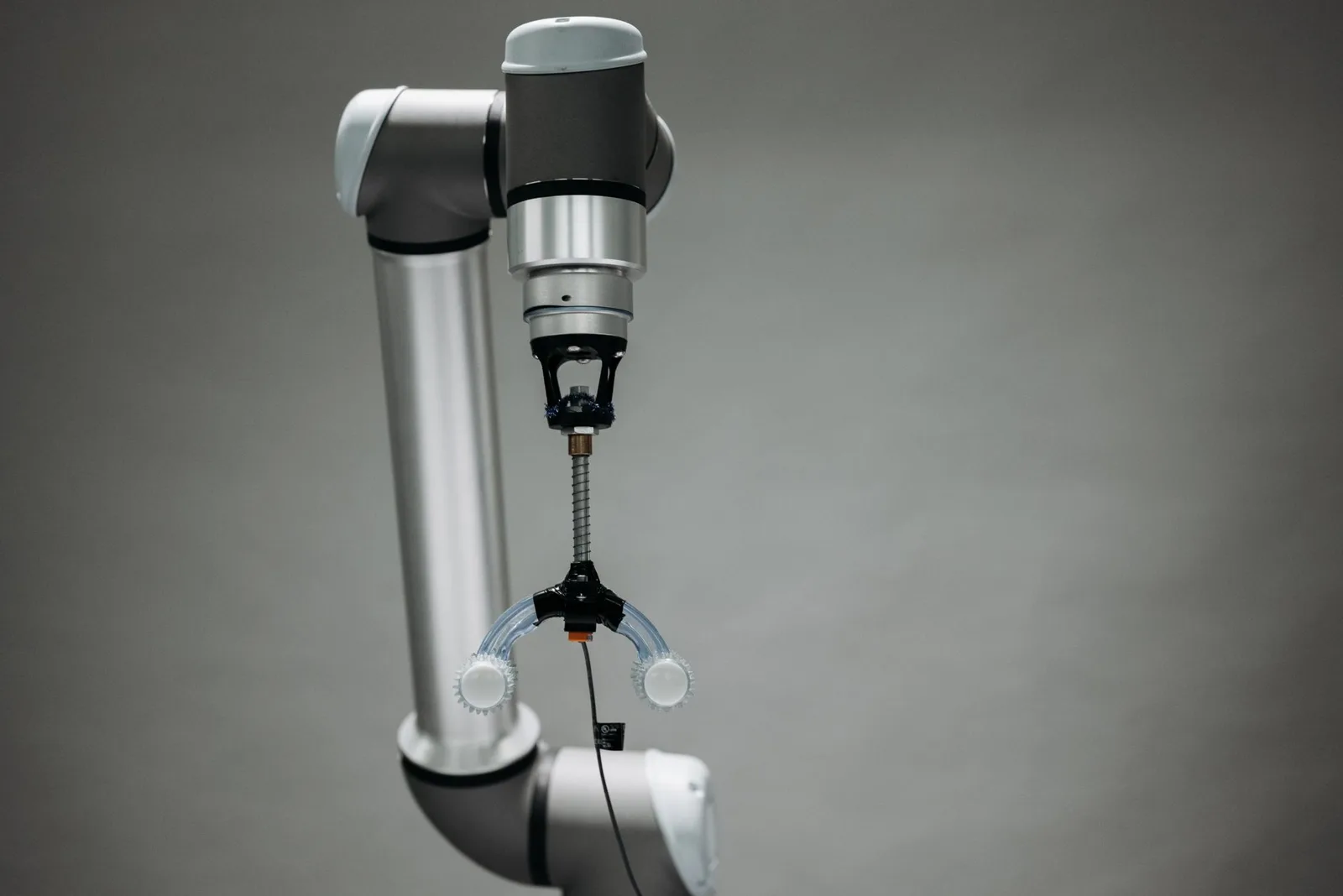
TL;DR: Grabette, released in July 2026, is a handheld, open-source system that records robot-manipulation data for about 490 €. It uses dual cameras, magnetic encoders and a synchronized clock to produce ready-to-train datasets in the LeRobot format, which are hosted on Hugging Face. By removing the need for expensive teleoperation rigs, Grabette could democratize data collection and help solve the industry-wide shortage of real-world manipulation data.
Key facts
- Grabette was launched in July 2026 as an open-source handheld system for robot-manipulation data collection [2][3][4][5][6].
- The device costs roughly 490 € for the full bill of materials, using a Raspberry Pi, Pi cameras, an OAK-D depth sensor and magnetic encoders [4].
- A dual-camera setup—wide fisheye for context and an RGB-D sensor for six-degree-of-freedom trajectory reconstruction via SLAM (simultaneous localization and mapping)—captures synchronized visual and kinematic streams [2][3].
- Recorded logs are processed in a browser-based pipeline that automatically reconstructs trajectories, cleans data and exports it in the LeRobot format, ready for machine-learning frameworks [2][3][5].
- All processed datasets are uploaded to the Hugging Face Hub, providing a vendor-neutral, community-driven repository for manipulation data [2][3].
- Grabette pairs with the Gripette end-effector, a robotic gripper with identical hardware, to execute policies learned from the collected demonstrations [2].
- The project is backed by Pollen Robotics and Hugging Face, aiming to create a large, collaborative dataset that could accelerate research on transformer-based VLAs, diffusion and flow-matching models [2][6].
An affordable, open platform for robot-manipulation data
In July 2026, Pollen Robotics and Hugging Face released Grabette, a handheld gripper system that lets anyone capture robot-manipulation data without buying costly teleoperation rigs. The entire hardware stack is built from off-the-shelf parts— a Raspberry Pi, standard Pi cameras, an OAK-D RGB-D depth sensor and magnetic encoders— and can be assembled for roughly 490 € [4]. This price point lowers the barrier for university labs, hobbyists and small research teams that previously could not afford dedicated data-collection rigs.
How the device records data
Grabette’s core is a dual-camera configuration. A wide fisheye lens mounted on the wrist gives a context-rich view of the surrounding workspace, while the RGB-D sensor captures depth information that enables six-degree-of-freedom trajectory reconstruction via SLAM (simultaneous localization and mapping) [2][3]. Magnetic encoders attached to the gripper report the opening and closing state, and all sensor streams are synchronized to a single clock, ensuring precise time alignment across visual and kinematic data [2].
After a demonstration, users plug the recorded log into a browser-based processing pipeline. The pipeline automatically runs SLAM to rebuild the 3D path, cleans noisy frames, and exports the result in the LeRobot format, a standardized schema that modern machine-learning frameworks understand out of the box [2][3][5]. This eliminates the manual data-wrangling steps that have traditionally slowed down robot-learning research.
From raw logs to shared datasets
Once processed, the datasets are uploaded to the Hugging Face Hub. Hosting the data on a vendor-neutral platform makes it easy for researchers worldwide to download, remix, and benchmark their algorithms without dealing with proprietary pipelines [2][3]. The open-source nature of Grabette also encourages community contributions; anyone can add new recordings, improve the processing code, or extend the hardware design.
The Gripette counterpart
Grabette is paired with the Gripette end-effector, a robotic gripper that mirrors the handheld device’s hardware specifications. Policies learned from Grabette demonstrations can be transferred directly to Gripette, allowing a seamless loop from human-collected data to robot execution [2]. This hardware symmetry simplifies the training pipeline and reduces the risk of mismatched sensor characteristics.
Why open data matters for robot learning
A major bottleneck in advancing robot manipulation is the scarcity of diverse, real-world datasets. Most existing collections are gathered in controlled labs with expensive equipment, limiting the variety of objects, lighting conditions and hand-to-object interactions. Grabette’s low-cost, portable design aims to seed a large, collaborative dataset that no single lab could compile alone [2][3][5][6]. By providing a steady stream of real-world recordings, Grabette could accelerate research on transformer-based VLAs (vision-language-action models), diffusion models, and flow-matching models, which all rely on rich, high-quality data to learn robust manipulation policies.
Implications for Thai robotics research
Thailand’s growing robotics community, from university labs to startup incubators, often faces budget constraints that limit access to large-scale data collection. Grabette’s modest cost and open licensing make it a practical option for Thai researchers seeking to train AI models for tasks such as warehouse picking, agricultural harvesting, or assistive devices. By uploading locally collected data to the Hugging Face Hub, Thai teams can contribute to—and benefit from—a global repository, fostering collaboration and raising the visibility of regional research.
Looking ahead
Grabette is still early in its adoption curve, but its design philosophy—affordable hardware, automated processing, open sharing—aligns with the broader push toward democratized AI research. If the community can rally around the platform and contribute enough varied recordings, Grabette may become a cornerstone for the next generation of robot-learning algorithms, helping to close the data gap that has held back many promising approaches.
The information in this article is based on announcements and technical documentation released by Pollen Robotics and Hugging Face in July 2026.
Sources
- Grabette Lowers Costs and Simplifies Robot Data Collection (welcome.ai) — 2026-07-21
- HyperAI (hyper.ai) — 2026-07-24
- Grabette: an open system to record robot-manipulation data (huggingface.co) — 2026-07-21
- Grabette: an open system to record robot-manipulation data (confiatech.com) — 2026-07-21
- Can Grabette Revolutionize Robot Learning with Open Data Collection? (futurumgroup.com) — 2026-07-22